
BLEACH, Re and Mushoku Tensei could hardly be more different from one another.
One is a legendary battle shonen returning to finish a story that began more than two decades ago. One is a psychological isekai built around suffering, failure and starting over. The other follows a deeply flawed man trying to live his second life differently.
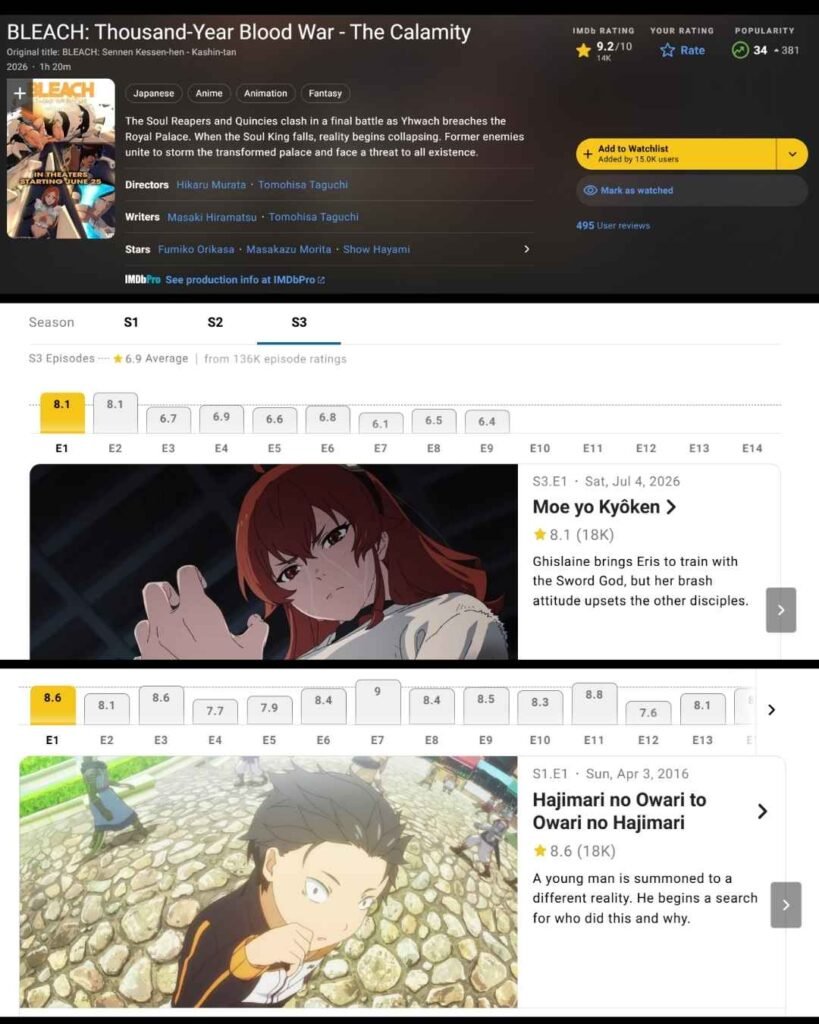
Yet in 2026, parts of their fandoms have somehow found themselves fighting over the same thing:
IMDb ratings.
Episodes receive incredibly high scores. Screenshots spread across social media. Rival fans accuse each other of artificially boosting ratings. Then 1/10 ratings suddenly appear. Another fandom retaliates, and before long the conversation is no longer about the episode itself.
It becomes:
“My anime deserves the 10.”
“Your anime doesn’t.”
And that may be one of the most pointless wars anime fans are fighting right now.
What Is Anime Review Bombing?
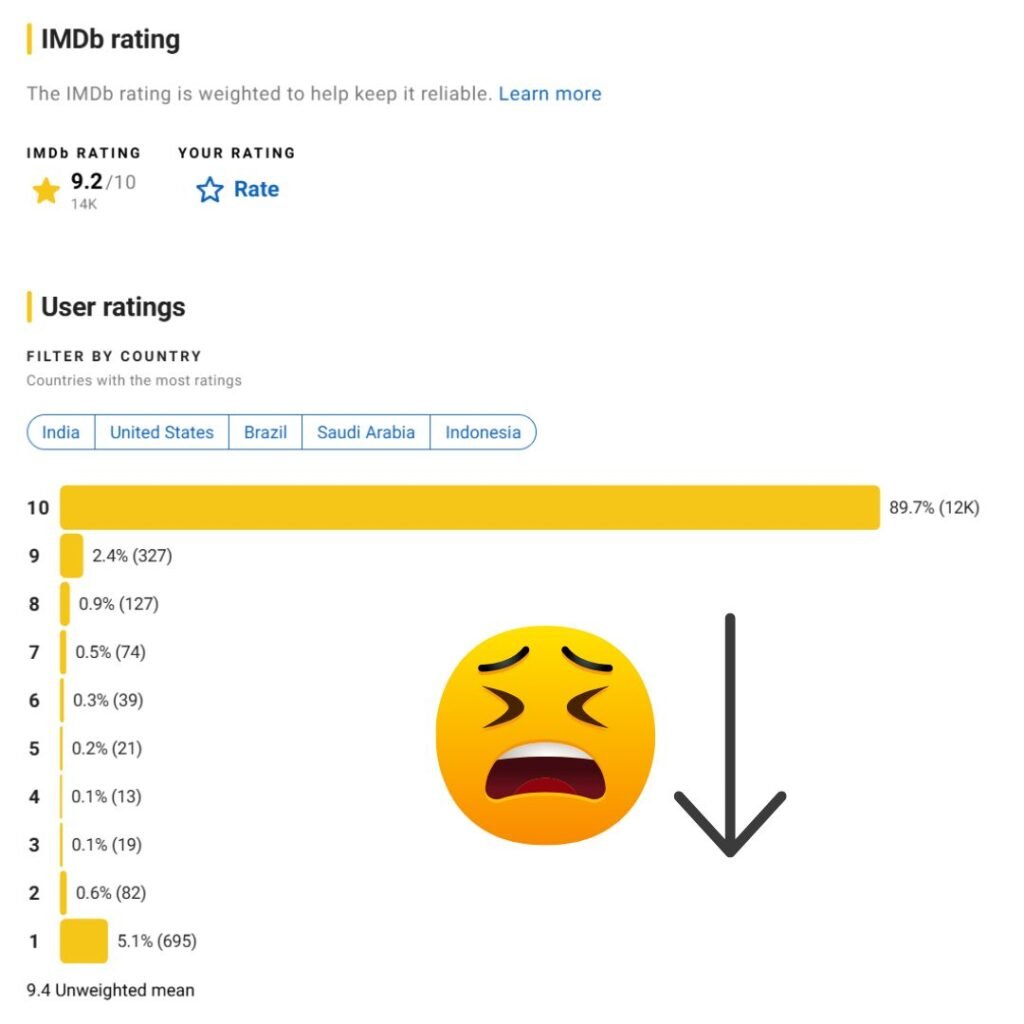
Review bombing happens when people deliberately submit large numbers of extreme ratings — usually 1/10 scores — not because those ratings represent their genuine opinion of the episode, but because they want to lower its overall score.
The opposite can happen as well. Fans may mass-submit perfect ratings in an attempt to push their favorite series higher.
That distinction matters.
Giving an episode a 4/10 because you genuinely disliked it is criticism.
Giving something a 1/10 without watching it because its rating surpassed your favorite anime is manipulation.
IMDb itself acknowledges that people sometimes vote specifically to inflate or deflate ratings. The platform therefore uses weighted averages and additional safeguards when it detects unusual voting patterns rather than treating every vote equally.
And in 2026, this problem has once again become highly visible within the anime community.
Join the 24K Anime Community
Be part of the conversation and connect with anime fans worldwide.
Re Season 4 Became an Early Target
One of the biggest rating stories of the year came from Re -Starting Life in Another World- Season 4.
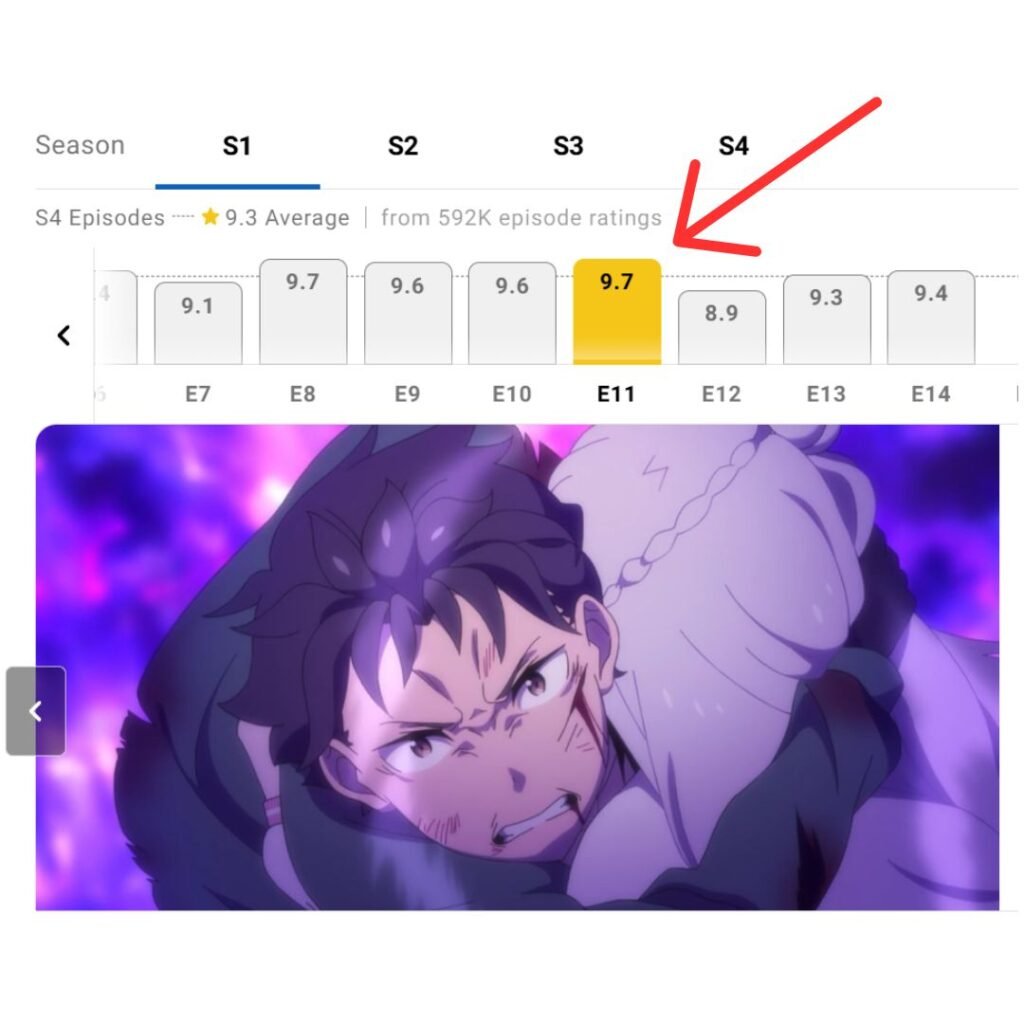
After Season 4 Episode 11 aired in June 2026, the episode briefly achieved a perfect 10/10 rating on IMDb with thousands of votes.
It was an extraordinary moment for Re fans.
But the celebration quickly became another fandom argument.
On June 18, an IMDb Community report claimed the episode had accumulated more than 22,000 ratings before receiving a sudden surge of extremely low scores. IMDb staff responded by acknowledging the report and saying that the company has safeguards designed to detect attempts to artificially inflate or deflate ratings.
Reddit discussions from the same period show how quickly the conversation shifted from celebrating the episode to accusing fans of other franchises of attacking it.
Whether every low rating came from a rival fandom is impossible to prove.
That uncertainty is important.
A handful of screenshots cannot demonstrate that thousands — or millions — of fans belonging to an entire community participated.
But the hostility surrounding the score was clearly real.
Mushoku Tensei Was Pulled Into the Rating War Too
Mushoku Tensei: Jobless Reincarnation has always generated strong opinions. Rudeus is an intentionally controversial protagonist, and criticism of his actions and the themes surrounding the series has existed since the anime began. Viewers are completely entitled to dislike the show for those reasons.
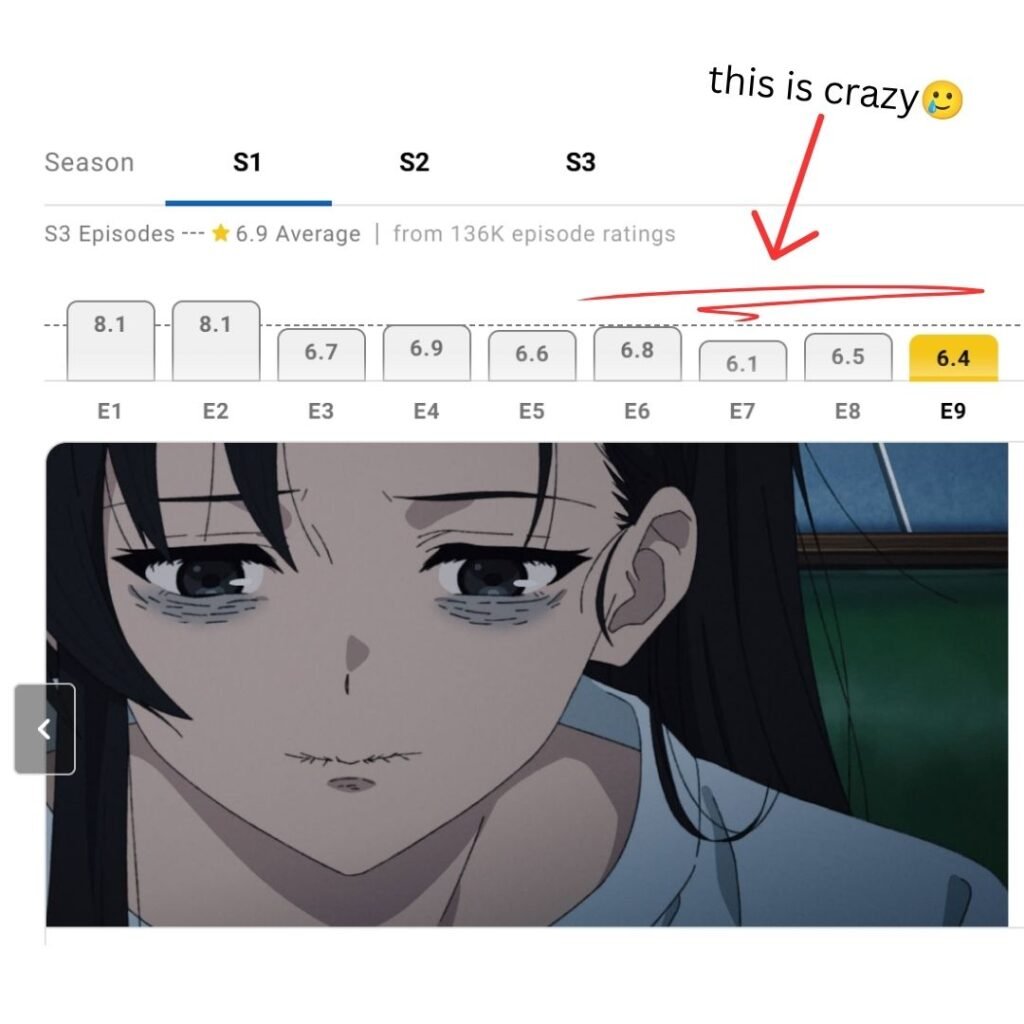
Season 3, however, also became surrounded by accusations of rating manipulation. During its 2026 run, fans began pointing to unusually high numbers of extremely low IMDb ratings on individual episodes, with community discussions questioning whether some of those votes represented genuine criticism or attempts to push the scores down.
That distinction is important. A person who watches Mushoku Tensei and genuinely thinks an episode deserves a low score is simply expressing an opinion. Review bombing is different: it involves rating something primarily to manipulate its overall score rather than honestly judging what was watched.
As arguments around Re intensified, Mushoku Tensei increasingly became part of the same conversation. Fans from both communities accused one another of manipulating ratings, and before long the debate became less about either anime and more about which fandom was supposedly attacking the other.
Then BLEACH Entered the Fight
The situation became much bigger when BLEACH: Thousand-Year Blood War delivered another highly rated episode during its final run.
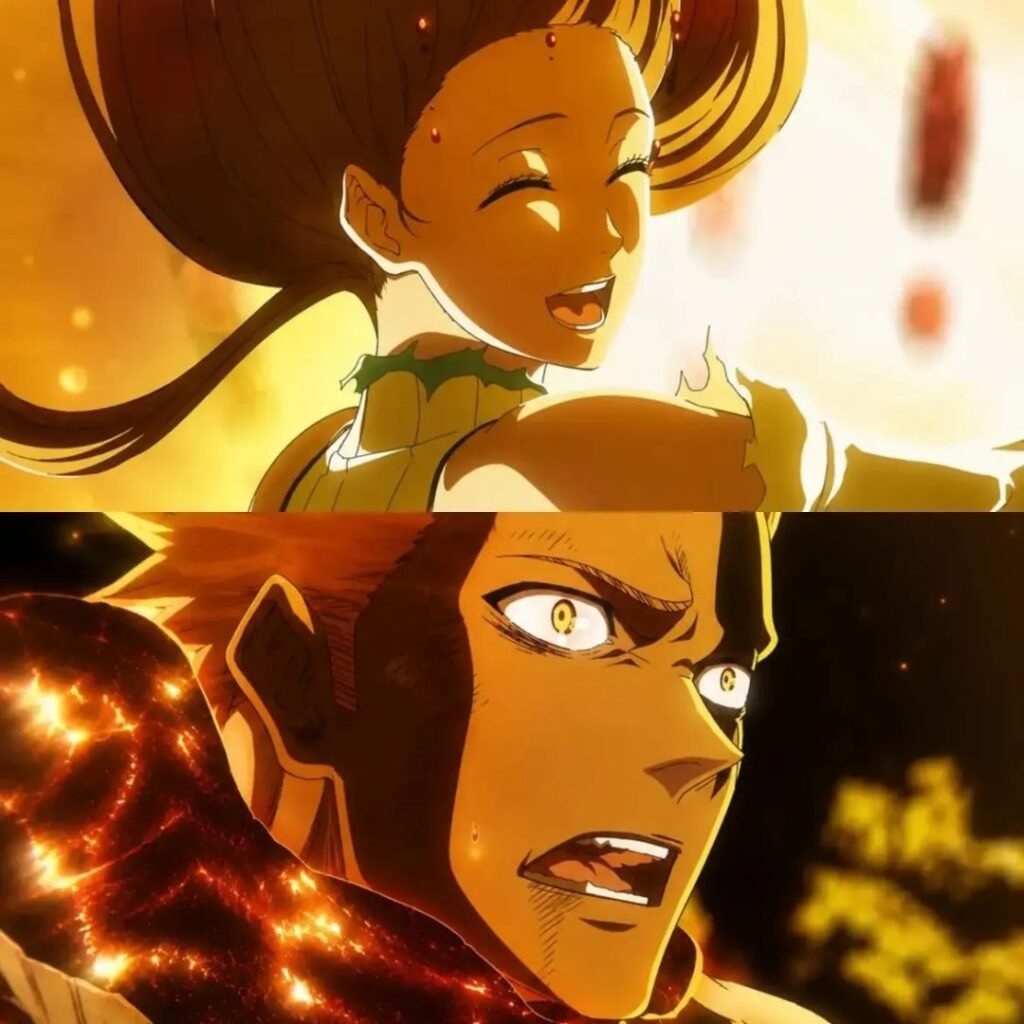
The episode quickly attracted tens of thousands of IMDb votes and briefly reached an almost perfect score. That should have been a moment for BLEACH fans to celebrate an anime that had returned after years away and was finally receiving an expanded adaptation of its final arc.
Instead, another rating war began.
A wave of extremely low scores appeared, while screenshots of negative reviews comparing BLEACH with Mushoku Tensei started spreading across social media. Some BLEACH fans interpreted those posts as evidence that Mushoku Tensei supporters were deliberately attacking the series, and the accusations quickly reached other anime communities as well.
The problem is that individual accounts cannot represent an entire fandom. Someone leaving a negative BLEACH review while praising Mushoku Tensei proves what that individual account did; it does not prove that the wider Mushoku Tensei community organized an attack.
The same principle applies to Re and BLEACH fans. Millions of people watch these series, while only a tiny fraction are participating in rating wars online.
Who Actually Started This Review-Bombing War?
At this point, confidently declaring one fandom responsible would be misleading.
There are screenshots of suspicious reviews, unusual rating patterns and posts encouraging retaliation. What we do not have is enough reliable evidence to say that the BLEACH, Re or Mushoku Tensei fandom as a whole started the conflict.
Once retaliatory voting begins, discovering who threw the first stone becomes even harder. If somebody gives BLEACH a 1/10 while claiming Mushoku Tensei is superior, some BLEACH fans may retaliate against Mushoku Tensei. Mushoku Tensei fans then see their scores falling and believe they are being attacked, creating another round of retaliation.
Trolls can make this worse. Anyone can create an account, pretend to represent another fandom and leave a deliberately provocative review. Once the screenshot spreads, thousands of people may react without ever knowing whether the original account genuinely belonged to that community.
Instead of endlessly asking which fandom started the war, there is a much more useful question to ask: why are anime fans allowing anonymous ratings to turn entire communities against one another?
Review Bombing Did Not Start With These Three Anime
The current conflict is only the latest version of a much older internet problem.
The term “review bombing” became widely associated with coordinated negative reviews around the late 2000s, with the 2008 controversy surrounding the video game Spore often cited as an early major example.
Anime developed its own version as websites such as MyAnimeList and IMDb became increasingly important to online fandom discussions. Over the years, ranking battles involving titles such as Fullmetal Alchemist: Brotherhood, Attack on Titan, Fruits Basket, Oshi no Ko and Frieren showed how seriously some fans had begun treating numerical scores.
At some point, ratings stopped being just a way to measure audience reaction and became trophies that fandoms wanted to defend.
That mindset is what eventually leads to situations like the current BLEACH, Re and Mushoku Tensei conflict.
Why Do Fans Care So Much About Ratings?
For some viewers, a favorite anime gradually becomes part of their identity. Instead of simply saying, “I love Re,” having Re recognized as better than another anime can start feeling like validation of their own taste.
The same can happen with BLEACH, Mushoku Tensei or practically any large franchise.
Social media makes this worse because competition creates engagement. A post saying “BLEACH had an amazing episode” primarily attracts BLEACH fans. A post saying “BLEACH just destroyed your favorite anime” attracts several fandoms and generates far more arguments, screenshots and reactions.
Then retaliation begins. One group sees suspicious 1/10 ratings and responds by attacking the anime they believe is responsible. The other group sees its own rating falling and responds again.
Eventually, everybody believes they are simply defending themselves.
Why This Review-Bombing Culture Needs to Stop
At the end of the day, we became anime fans because we enjoy stories, not because we want to win rating wars.
You can believe Re is the best isekai ever made, prefer Mushoku Tensei, or love BLEACH more than both. All of those opinions can exist at the same time. Someone else enjoying a different anime does not take anything away from the one you love.
Behind every episode are creators, writers, animators, voice actors and production teams who spent years bringing these stories to life. Criticizing their work is completely fair, but deliberately giving another anime a 1/10 just because it surpassed your favorite is not criticism. It is simply manipulating a number.
Review bombing Re does not make BLEACH better. Lowering BLEACH’s score does not improve Mushoku Tensei, and attacking Mushoku Tensei does not make Subaru a better character.
We can enjoy all three, enjoy only one, or skip whatever is not for us. We can debate writing, characters and animation without turning everything into “my anime is better than yours.”
Anime is not a zero-sum game.
Watch what you love, respect what others love, and let the stories speak for themselves.
Done with the fandom wars? Explore our Top 10 Anime, discover New Anime, or take a Hidden Dive into underrated gems you may have missed.
- Anime Removed From Crunchyroll: Which Shows Disappeared and Why
- Grand Blue Waited Nearly 7 Years for Season 2 — So Why Is Season 4 Already Happening?
- Top 10 Romance Anime to Watch in Fall 2026
- The Dangers in My Heart Manga Ends After Eight Years, Creator Shares Farewell
- Top 10 Dark Shonen Anime Like Demon Slayer You Should Watch in 2026